
Manuel Antonio Sloth & Wildlife Tour
Get face-to-face with Costa Rica's most iconic animal. Sloths in the wild, plus monkeys, macaws, and more with an expert naturalist guide.
Costa Rica's Most Iconic Animal, Up Close
Of all the wildlife encounters Costa Rica has to offer, seeing a sloth in the wild is the one most visitors remember longest. There is something about the sloth's unhurried existence that makes every encounter feel like a privilege: that permanent expression of serene contentment, the extraordinary slowness, the complete indifference to the world passing below. Manuel Antonio National Park is one of the best places in Central America to see them.
Our Manuel Antonio sloth tour is led by ICT-certified naturalist guides with 14+ years of experience in the park. They have spent thousands of hours on these trails and know exactly which trees the sloths favor for sleeping and feeding in every season. What looks like a featureless canopy to most visitors reveals, under our guide's spotting scope, a three-toed sloth wedged into a cecropia fork ten meters overhead.
Two Species, Two Very Different Personalities
Manuel Antonio is home to both sloth species found in Costa Rica. The brown-throated three-toed sloth (Bradypus variegatus) is the more commonly spotted of the two. It tends to choose exposed positions in the middle canopy and often feeds in the lighter-coloured cecropia trees, making it more visible. Adults have a distinctive pale face with dark eye patches, and the males display a striking orange and black patch on their back.
The Hoffmann's two-toed sloth (Choloepus hoffmanni) is nocturnal and sleeps more deeply concealed in dense vegetation. Harder to find, but unforgettable when located. Larger than the three-toed, with a more bearlike face and no tail, two-toed sloths are the species most commonly seen in the park's forest interior. Our guides know their favorite trees.
More Than Just Sloths
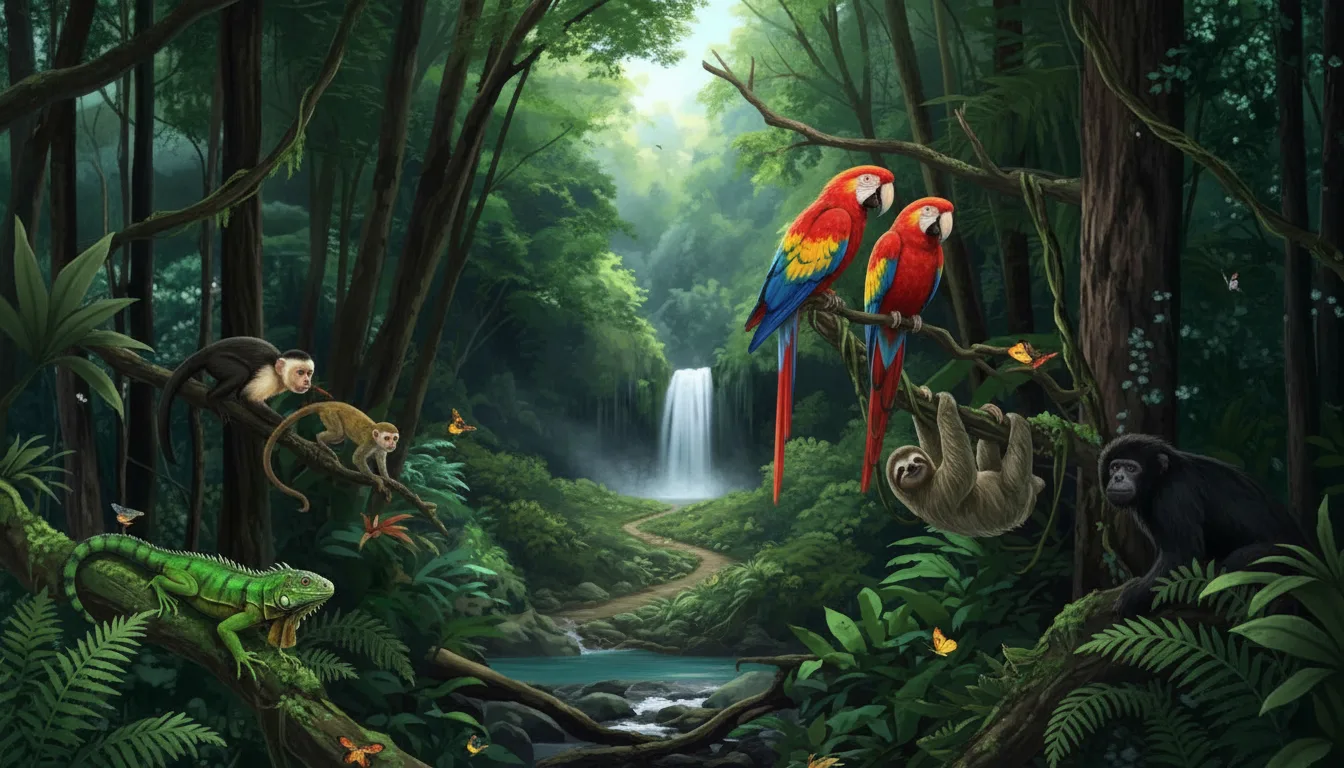
While sloths are the focus, Manuel Antonio always delivers more. On a typical sloth tour you can also expect encounters with white-faced capuchin monkeys, bold and endlessly curious to watch, as well as scarlet macaws in vivid pairs, green iguanas along the trail, and the famous Jesus Christ lizard capable of running across water. With an 80–90% wildlife sighting rate, you don't wait and hope on this tour. You see.
✨ Tour Highlights
- Two-toed and three-toed sloths in their natural sleeping trees
- All three monkey species: white-faced capuchin, squirrel monkey, and howler monkey
- Scarlet macaws, often seen in pairs flying through the park's canopy
- Green iguanas basking on trails and beaches
- Jesus Christ lizards running on water
- Toucans, kingfishers, motmots and dozens of bird species
✓ What's Included
- ICT-certified expert naturalist guide
- Professional spotting scope for canopy views
- High-quality binoculars
- Wildlife identification guide
- Small group (max 10 · bigger groups welcome)
- Free parking
✗ Not Included
- Park entrance ticket (ask us to arrange)
- Food and beverages
- Transportation
Reserve Your Spot Today
Message us on WhatsApp. We reply within minutes, 7 days a week.
Book on WhatsApp✓ Free cancellation up to 24h · ✓ No booking fees · ✓ Instant confirmation
Meeting Point & Location
Frequently Asked Questions
Is it guaranteed I'll see a sloth?
While no wildlife sighting is ever 100% guaranteed, our guides have spent years learning the exact trees where sloths sleep and feed in Manuel Antonio. Our overall wildlife sighting rate is 80–90%, and sloths are among the most reliably encountered animals in the park. They move so little that once our guides know the trees, finding them is more a matter of looking carefully than of luck.
What is the difference between two-toed and three-toed sloths?
Manuel Antonio is home to both Hoffmann's two-toed sloth (Choloepus hoffmanni) and the brown-throated three-toed sloth (Bradypus variegatus). Three-toed sloths are more commonly spotted because they spend more time near the canopy surface and often choose exposed branches. Two-toed sloths tend to sleep more deeply tucked into vegetation. Both species are remarkable to observe up close. Our guides will explain the behavioral and physical differences when we encounter them.
How close can we get to the sloths?
We observe sloths from a respectful distance, close enough for excellent viewing through our spotting scope and binoculars, but without disturbing the animal. Our guides follow strict no-touch, no-flash protocols. You'll get a clear, close-up view through the spotting scope that feels remarkably intimate without stressing the animal.
What is the best time of day to see sloths?
Early morning is ideal. Sloths are most likely to be in exposed positions feeding before retreating deeper into the canopy as temperatures rise. Our morning tours consistently produce the best sloth encounters. That said, sloths sleep up to 20 hours a day and can be found at almost any hour. We find them on afternoon tours regularly as well.